Thursday, December 15, 2011

Guess what?

Chicken butt!

There's not a lot of news this week. We went to El Jocote on Saturday with a lot of big plans for meeting all the right people, and then I wasn't feeling well that evening and on Sunday. Mostly, we just sat around, and I slept a lot. It gave us some time to enjoy the festive holiday decorations our host family had put up:

And we had time to get to know some of the family's animals a little bit better. There are always pigs and chickens around:

...but more on chickens later. The pigs are kind of gross and stinky and aren't allowed in the house, except when the little ones are being fed - they are fed inside to keep the big ones (their parents, I might add) from hogging (ha ha!) all the food. All the rest of the animals try to steal their food instead:
Though, to the dog's credit, it really could use another meal or two.

The parakeets, or whatever kind of bird they are, took a liking to Jeff (who wouldn't?):

And the family's cat took a liking to our room. I suppose it's the only place it could get away from the chickens and dogs and pigs and kids for a quiet nap. Although, it really isn't a cat so much as a perma-kitten - it's way smaller than a regular cat, but they tell us it's older than a kitten and therefore isn't going to grow anymore. It is small enough that it would fit inside a one liter Nalgene:

Sunday evening, we went to another Purisima celebration at a neighbor's house. Theoretically, the actual holiday of the Purisima, or the immaculate conception, is on December 7th, but they have celebrations for it all through the month of December. Each evening, a different house sets up an altar and invites the neighbors over. Everyone comes over and sings hymns for an hour or so (well, the women do, while the boys are out shooting off firecrackers), then the host yells, "Who causes such happiness?" and all the guests yell back, "The conception of Maria!" Then the host gives out sweets, and everyone goes home. About 60 or 70 people showed up to the one we went to, which was at the house of the guy who is essentially mayor of the town.

On Monday, we went to a wedding of people we didn't know in the neighboring village of El Balsamo. Apparently, wedding crashing is not possible here - our host family was invited, so they brought us along. Jeff offered to take pictures for them, although there were quite a few other cameras there. The official photographer kept lining people up for pictures, which always makes Nicaraguans stand very straight and look very serious. I don't know that they'll appreciate the more candid shots that Jeff got, but we'll print a few of them out and give them to the new couple anyway.

So here's how it went: The invitation said to be at the house of the father of the bride at 8 am, so we got up at 7 and had breakfast of bread and coffee. We waited for a while, wondering when we would leave, and at about 8:30 we were fed some rice, beans, and tortillas. We finally took off from El Jocote at about 9 am with the host family's daughter and some neighbor women - the host father said he would leave a little later. We arrived a little before 10 am and sat around for a while with lots of other people, the women inside the house and on the porch, the men outside under the trees. Someone came by and gave us little pieces of wedding cake in paper napkins, which was surprisingly good - much better than most US wedding cakes. Somewhere between 10 and 10:30, we went inside and were invited to sit and eat. When we told our host sister that we had just eaten, she said we really should sit and eat, so we did. We had an excellent meal of rice, meat, veggies, and a maize-and-meat mixture that seemed a little like Mexican restaurant queso dip. It was excellent, and we were really full. We wandered around for a bit, then noticed that everyone was crowded around the house. We crowded in with the crowd and saw that people were dancing inside. Then the bride and groom appeared, and with much arranging, they got all the attendants (10 bridesmaids and groomsmen, and three kids) lined up in front of the bride and groom, and everyone started walking down the path towards town:

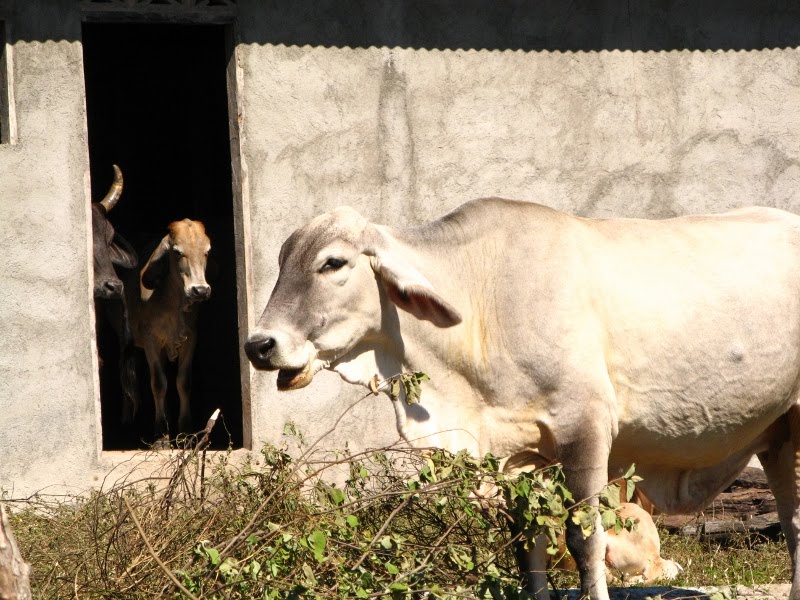
We walked for about 20 minutes over some fairly rough trails for all the ladies in high heels, with all sorts of animals watching us pass:
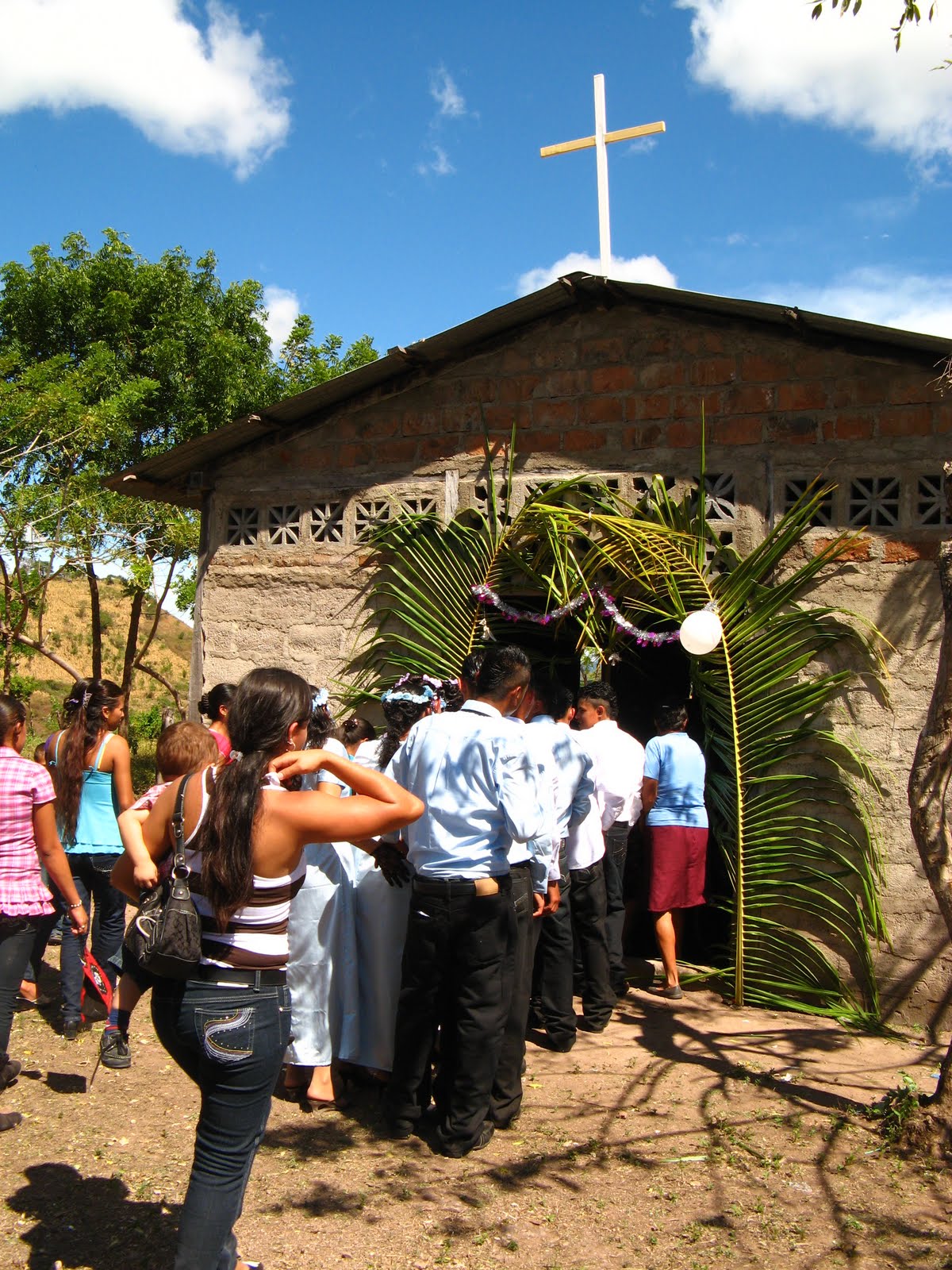
And finally arrived at the church:


The church was tiny, so as many people as possible shoved their way in, and the rest hung out around the building, occasionally pushing towards a doorway or climbing up to a window to get a look:

There was even a mariachi band!

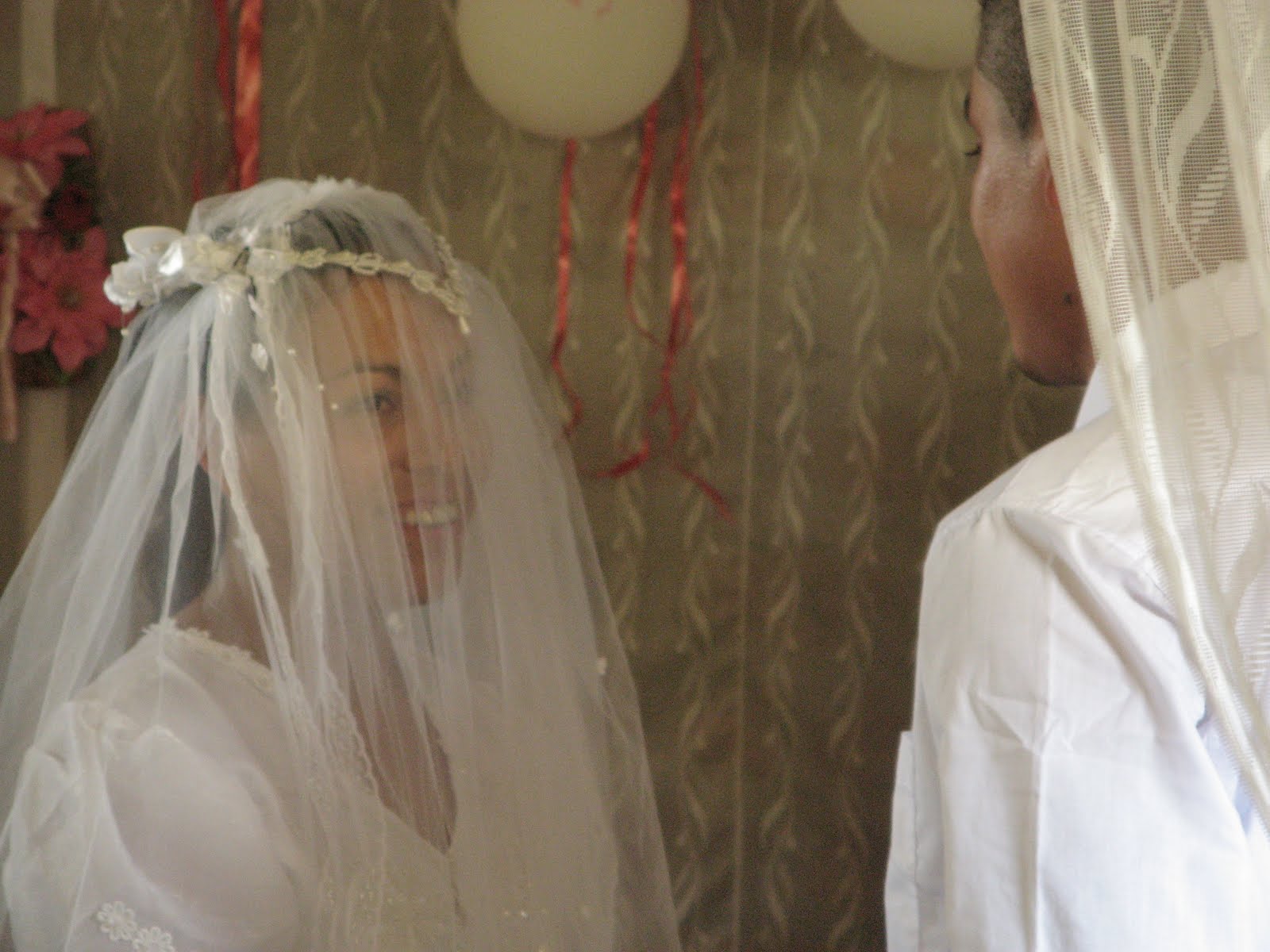
The wedding took two hours and was pretty formal, but the bride was glowing through the whole thing nonetheless:
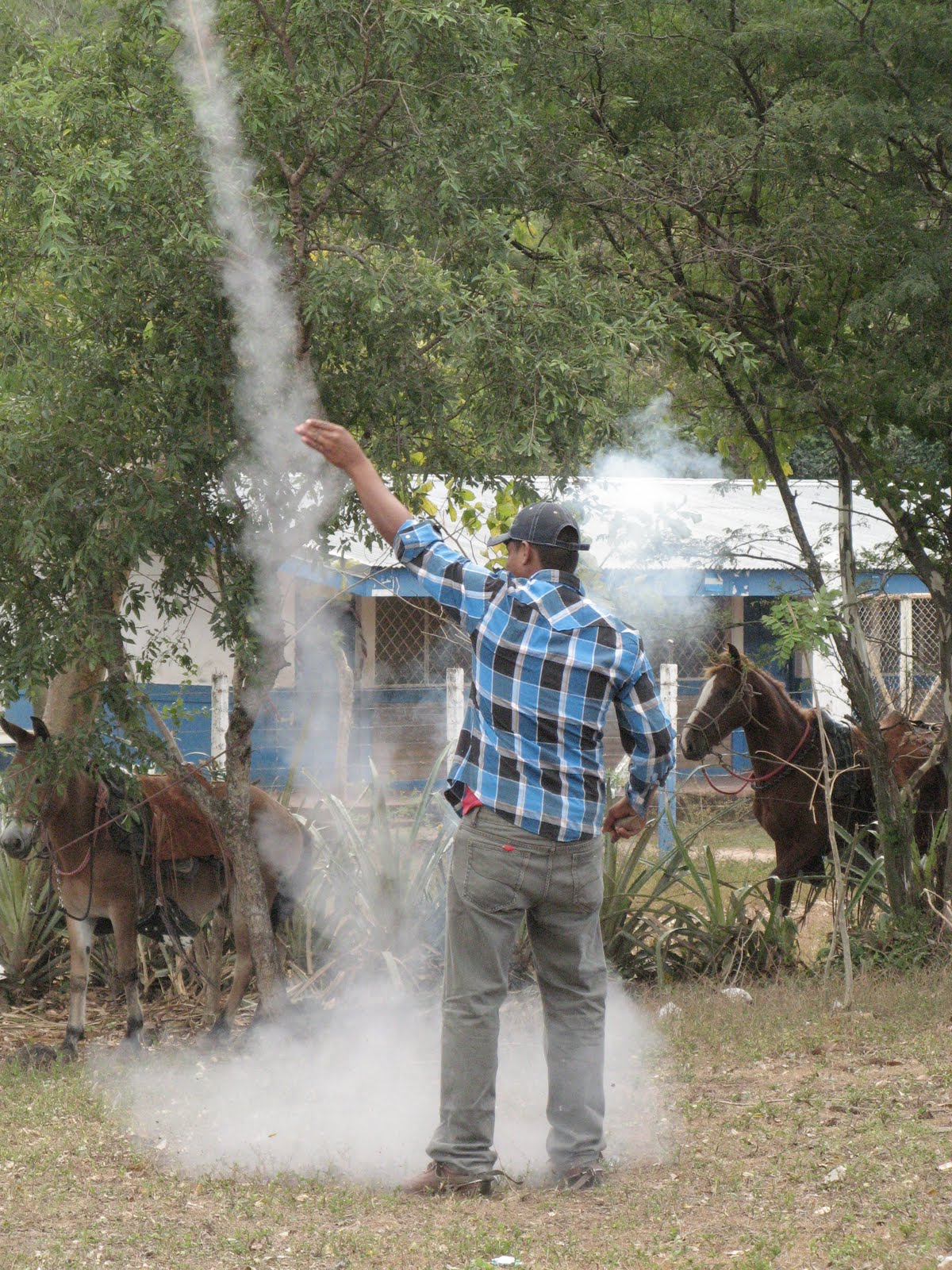
And, of course, there were fireworks. The fireworks here are typically firecrackers or bottle rockets that just make noise, not pretty sparklies. In this case, they had gigantic bottle rockets with 3-foot long sticks that they lit and released from their hands (apparently, they're not called -bottle- rockets here):
After the two-hour ceremony was finally over, the crowd slowly left the church, with much stern picture taking and many starts and stops. The attendants made an arched tunnel with their arms for the bride and groom to walk through, and this was the one time that Jeff got a good picture of the couple both actually -smiling-.

Then the whole group headed back toward the houses...
...to go to the home of the groom's parents, who threw a party very similar to the pre-wedding party at the bride's house, right down to the same food and the same music (canned loud-base pop radio music, not mariachi or anything traditional). The first dances were danced, and the dance floor was opened, and our host father decided it was time to take off. That night, after dinner, we sat around discussing weddings with the family, including the fact that our host father was not amused that the couple walked to the wedding together, and -not- with separately, each with their parents as is traditional. He considered it disrespectful to their parents. I guess even Nicaraguan village kids have crazy, non-traditional weddings.

We had gotten back to the house that afternoon at about 3:30 or 4 pm, and I realized that I hadn't been drinking enough water and had a dehydration headache, which didn't go away until after dark. So that was another day of not visiting who we had planned to visit - but at least we got to see a wedding.

The next day, I woke up finally feeling great. Jeff, however, woke up feeling not so great. At breakfast, he tried his best, but the beans, rice, tortilla, and fried egg were not going down well. He went back to bed, and a little later had to make a run for the bushes to be sick. He spent all day in bed feeling queasy. I mostly sat around trying to do stuff to make him feel better, but he couldn't eat anything and mostly just had to rest. The most useful thing I did was to run to the local shop (I wouldn't have known it was a shop if I hadn't been directed there - it was just somebody's house who happened to have a bunch of stuff for sale inside) to get alka-selzer like meds with aspirin and, later in the evening, a drink powder made of ground oats. The next day, he was no longer sick to his stomach, but he couldn't eat much. I stuck around, not being able to help much. In my useless boredom, in between bouts of Spanish studies, I had lots of time to figure out which chicken is which. But more on that later. First, a study in intercultural communication.

A major thing we had to figure out before we left El Jocote was how to get out of there. On the previous visit, we had ridden into El Balsamo in the AsoFenix company trucks, worked on a project there for an afternoon, and then hiked 20 minutes into El Jocote. The trucks left the next day and we stuck around for a few days. We planned on leaving by bus, but no busses run through El Jocote, so people have to walk to a neighboring town that has bus service. The regular bus from a close-by town called El Espino had "fallen apart," so we had to walk twice as far in a different direction to a different neighboring town called Bramadero to catch the bus there. Since that was the only bus we knew, when we came back to visit this time, we took the same Bramadero bus and the same long path back. When we asked around once we got to El Jocote, we discovered that the El Espino bus has been repaired, so we decided to figure out how to catch that bus out of town this time. It has two advantages: one, the walk to it is only half an hour, not an hour, and is on flatter terrain; and two, it leaves at 6:30 am, not 5:30 am, so we could get up 4:30 instead of 3:00 am. The trick was figuring out exactly when it left and exactly how long it would take to walk there.

This was a trick because Nicaraguans do not think about time the same way we do. When we asked, "When does the El Espino bus leave?," having previously been told 6:30 am by the people we work with in Managua, our host father said "5:00." We told him that we thought it left more like 6:30, and he said well, of course, it leaves El Espino at 6:30, but we need to leave the house at 5:00. We asked how long it takes to walk there, and a visiting guest said 10 minutes. Our host father agreed. We said if it takes 10 minutes, then why would we leave at 5 am to catch a 6:30 bus? They said the 10 minutes is if you are on a horse, and of course, we do not have a horse. Jeff said that it really only takes one minute, but that is if you are in a helicopter, and we don't have one of those, either. They did not get the joke. So we asked again what time we needed to leave the house, and the host father said 5:00. Even though this seemed a bit early to us for a shorter walk than the one we had already done to Bramadero, we figured it wouldn't hurt to be early, and set the alarm for 4:30 am.

We got up at 4:30, got ready for the day and packed up the last of our things, and at about 10 minutes to 5 stuck our heads into the kitchen, where they were preparing the day's tortillas, to say goodbye. They said, but aren't you going to have any coffee? It's ready! So we said okay, we'll have some coffee. The promptly all left the kitchen. A few minutes later, the host father came back to grind maize, the first of many steps in making tortillas, and the women chattered in their bedroom. A bit later, the host mother came in to wash up some cups, find some clean plates, find the bread, and made us up some plates of bread and cups of coffee. We sat an enjoyed our breakfast with the usual chatter of animals begging for crumbs, then stood up (about 5:15 now) and said goodbye again. They said, what's the rush? You don't have to leave for another half hour or so - it's dark out now, it will get lighter in a while. We said that we thought we needed to leave at 5 am, and they laughed. No, no, it only takes 20 minutes to walk there. Okay, 20 minutes for the host father, maybe 30 minutes for us. If you go now, you will have to wait in El Espino. And the bus will be late, probably 8:00. We said, but we thought it would be leaving El Espino at 6:30. They said, well, yes, it will be in El Espino at 6:30. It won't arrive in its final destination, Teustepe, where we change busses to get to Managua, until 8:00. Very late. And it doesn't take long to walk to El Espino. You would have to wait in El Espino if you left now. We said, but Jeff has been sick, and we may need to give more time for the walk, and we're ready to go anyway, so we should leave now. They said, you should wait until it's lighter out. We went into the bedroom for a minute, and decided to heck with it, we're ready to go and we either wait here or wait in El Espino. So we put our bags on and said goodbye again, and the host father laughed and took Jeff's bag and walked with us until we were out of El Jocote. We continued on our way. The walk ended up taking about 40 minutes, and we got there about 6 am, then had to wait in El Espino until 6:30 and watch the sunrise. Not such a bad wait, actually, and now we know the real time for walking and the real departure and arrival times of the bus, and next time we won't have to ask. Phew.

But I know all you've wanted to read about this whole time is chickens.

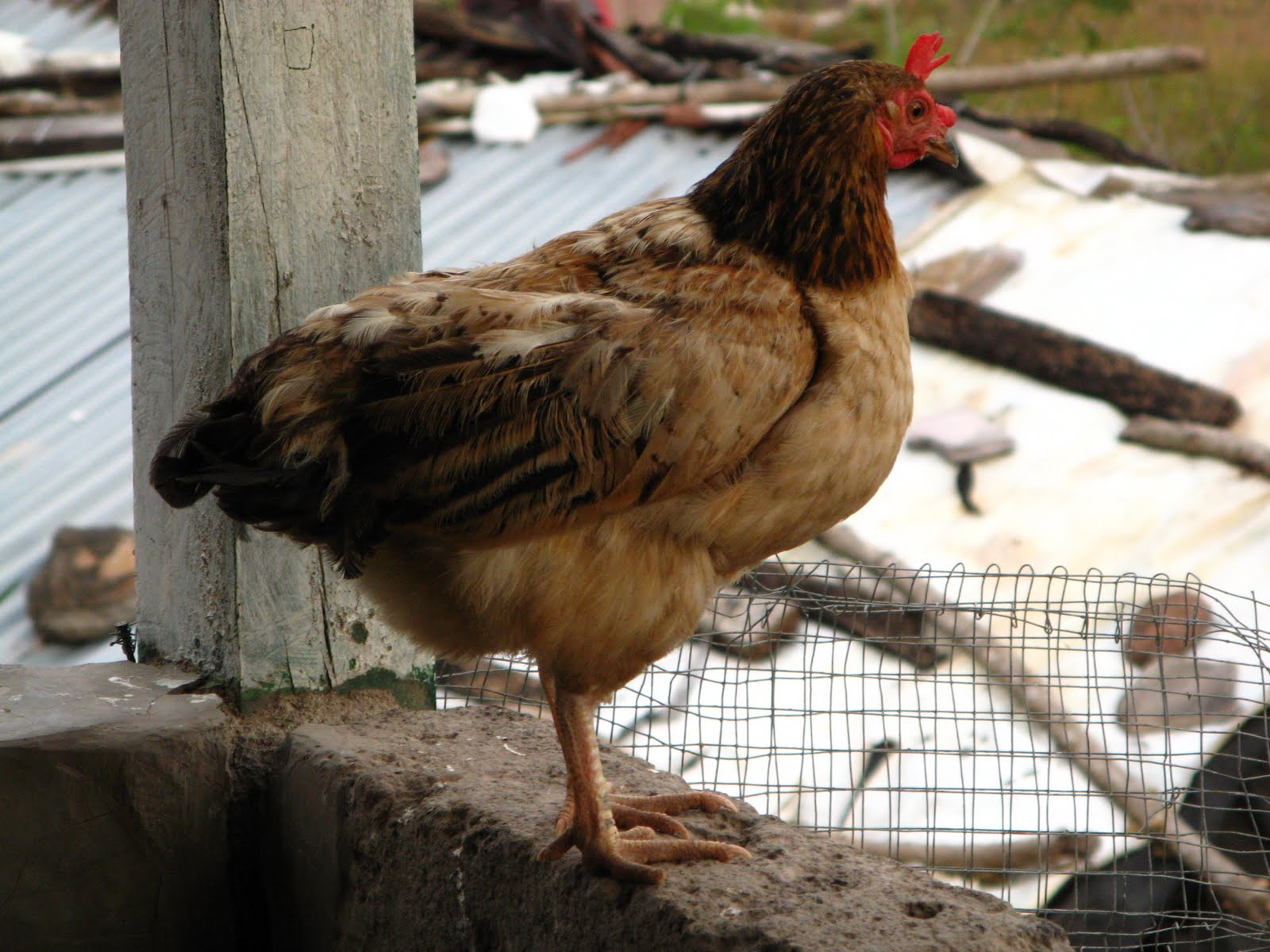
And so, without further ado, I introduce with pleasure, the Jarquin family chickens of El Jocote, Nicaragua. They have 15, more or less, and some of them I can't tell apart. Two are nesting, and I didn't get pictures. One is taking care of five little babies - make that four, as one was eaten the other day by a hawk - which I also neglected to take pictures of. But here are the ones I've named:

First, the rooster. He really doesn't need a name, since he's the only rooster:

Next is Pretty Lady, Jeff's favorite:

This one is Noisy Bird. She squawks a lot, sometimes going for more than 20 minutes at a run.
... or at least, I -think- that's Noisy Bird. There are several red hens that I have trouble telling apart.

Next comes Top-Heavy - I have no idea where her tail went:

...and the Bearded Lady - I have no idea why she has feathers under her beak:

...and Blagojevich, who has quite the head of... feathers:

...and Tipsy, who looks a lot like Blagojevich, but is missing a toe (not that you can see the missing toe in the picture, but I promise there's one missing):

And finally, Dinner. This is the first one I named. She came to my attention when she jumped up toward my hand while I was eating one evening to try to steal my tortilla. I was not amused, thus the name.
And that's about that. We're back in Managua to go to a AsoFenix company holiday party on the beach tomorrow, then have a real weekend without work. We aren't entirely sure what we'll be doing next week, but we'll most likely be headed back to El Jocote for another week-ish long stint, perhaps staying through Christmas.

Like I said, not a newsy week, but I still managed to drag it out to be a nice, long blog post. I believe next week is shaping up to be more interesting, and hopefully more healthy. Hope all is well with everyone out there reading this. Keep the comments coming - we love to hear that people are actually reading what we're posting!

Friday, December 9, 2011

El Roblar wind turbine

This week I went to help with the installation of a wind turbine in a village called El Roblar. Most of the legwork had been done before my arrival, but we had to put the whole thing together, and I wanted to learn more about this so I can help more in the future, plus there are some basic things I know about to help with. Kate has still been struggling with a persistent cough, so she stayed back at the office. Plus, there was some reading and organizing to do for our upcoming trip back to El Jocote this weekend. So I jumped in the back of the pickup truck with a wind turbine strapped to it--here we are figuring out how to position it:
Most of the way there was drivable, but the last mile to the village is just a very steep trail. So we loaded the turbine generator on a horse, and had locals help carry the turbine and tools up the hill (one older guy strapped the whole turbine to his back and shot up the hill in front of us).
Most of the town is on the other side of a mountain with hydroelectric power from a previous project, but there are a few households on this side who are wired up and almost ready to get power, minus a few parts. Here they are putting the last touches on a power line from the control house (not pictured yet) to their farmhouse below.

In the control house we checked all the wiring and battery banks and fixed some stuff. Actually, there were a slew of little problems that we had to fix with creative solutions as we set stuff up. For example, the voltage regulator had been set at the wrong voltage on the circuitboard. When we hooked up the batteries, all the power went to the dumpload, heating it up before we even hooked up the turbine. The dumpload is supposed to take excess voltage, well above the battery voltage, and redirect it from the turbine to the dumpload (basically a heater to waste the excess energy that the batteries can't absorb) to protect the batteries and the turbine from spinning too fast. It's not supposed to drain the batteries. We opened the panel that says "don't open" and found a little jumper on the circuit board that was on the wrong voltage and fixed it--after a couple hours of wondering what was wrong:
Then we hooked up the turbine and generator, balanced it, and had the locals help us lift the system:
And it successfully shot up in the sky next to the control house!

I'll leave out the details on how we put the turbine on backwards and all the other things that went wrong that we eventually fixed. We only had to add a day to the planned trip to make up for losses. There still was some idle time when the villagers let us pick some oranges from their orchard as a thanks to us. We climbed some trees and threw them down to the catcher on the ground, picking about 150 pounds of oranges:
The villagers did the final hookup on the transmission line, and we went in the houses and set up the breakers. When we got light in the house for the first time, Aaron, one of our co-interns, celebrated in the living room where they were drying a harvest of corn:
That night, we all played with the kids, singing, dancing, and playing a balloon game inside under their newly-working compact florescent lightbulbs. The night before, we had talked quietly under the light off smokey tin-can kerosene torches. The kerosene lamps, in addition to being smokey and inefficient, cost a lot in terms of fuel and carrying it up the hill. The villagers do pay a monthly fee for their electricity that we have set up for them, but it is less than they pay in kerosene and labor. We calculated that the people here use about 1/100th the electricity of your average US family. The 30 households on the hydroelectric system on the other side had a combined peak usage of 1500 watts during dinnertime, about the equivalent of a microwave oven. The rest of the time they used a lot less.

One other weird thing worth mentioning is that they listened to a daily radio program, Cuentos de Pancho Madrigal, that is a comedy narration about families in el campo. This particular story was about the religious celebration that night of the "Purisima" or the immaculate conception. The story was about a campesino (countryperson) who hooked up an electrical system to a village that had never had electricity, and he ended up burning up the virgin mary with christmas lights. It was extremely similar to what we had actually done, including that we did light up a virgin mary statue with christmas lights just in time for the Purisima--without burning it down, though.

Before going to bed, one of the kids was very fascinated by Aaron flossing his teeth. Aaron explained floss to the kid, and the kid proceeded to watch very closely with extra the help of a flashlight:

The kids in the villages are one of the greatest benefits of working in el campo. I woke up that morning in my hammock to a line of 4 kids, all sitting on a bench staring at me. In addition to being ever fascinated with the gringos and their strange habits, they wanted to try out my MP3 player, and they were just waiting for me to wake up to ask about it. I showed it to them and after a little bit of fascination of the music and spanish lessons I had stored in it, they became even more fascinated by the radio in it. For the rest of the morning it went around from kid to kid, all of them listening to the radio on my player. The funniest thing to me was that one of the few modern things they do have out in the country there is plenty of radios--just not as small as mine. As we got ready to go, a little girl brought us our horse to help us carry our oranges back to the truck. She was all dressed up in her Purisima best, bare feet, leading the horse around the farm on a line.
We all headed back down the trail carrying equipment and oranges back to the truck. The hill we were on and the valley below was one of the most beautiful views I have had in Nicaragua, second only to the view of the valley on the other side of the hill.
We got our stuff in the truck, they unpacked our oranges and sent us on our way back to the office:
All in all, it was a lot of good experience for two days. Tomorrow, Kate and I plan on going back to El Jocote again, armed with more information and a little more direction on what to do for our project. We should be back with more stories in a week or so.

Hasta la proxima!

-Jeff

Monday, December 5, 2011

El Jocote: starting work, kind of

We began with finishing an installation of a solar-powered irrigation system in the town of El Balsamo, kind of a "suburb" of El Jocote. El Jocote is where we will probably be working the majority of our time--more on that later. The road there really explains some of the development issues in these small villages. We drove on worse roads, but this is one where I had a chance to jump out and show our rig with equipment:


One of the prerequisites for our organization, AsoFenix, is for the town to make the road passable to a 4wd vehicle. Vehicle is the only way to realistically get major supplies to these towns, and vehicle access is expensive (gas plus the damage it does to your car), and only possible during the dry season, after a lot of human labor to fill ruts and potholes. The bad roads are a major reason for stick-and-mud houses without plumbing or electricity and the lack of proper latrines, a major health issue here. When we arrived in El Balsamo to start the irrigation project, we were greeted by this little kid and his pets:


The puppies in a shovel, a machete, a pair of flip-flops, and a shy but curious kids makes a pretty typical scene in el campo (the countryside), except that puppies are not necessarily always in shovels. Our boss, Jaime, sat in a chair outside and conducted a meeting with local landowners interested in irrigation projects:


There are two seasons here: constant rain during the geographical summer (which they confusingly call winter here), and the dry season, where there is 6-9 months of drought and brown during the geographical winter (which they refer to as summer). During their dry season "Summer," which is now, crops do not grow, and many men migrate to Costa Rica where they can continue earning money. The idea of being able to irrigate at home and continue to farm or grow something other than beans and maize is lucrative to many here.
So solar panels had been installed on a previous trip (they are usually donated and we currently have a glut of solar panels), and our job this week was to wire them to the pump and holding tank.


Another prerequisite is that the farmer has a well ready to go. We set up near his well surrounded by plantains and bananas that were thriving on the high groundwater in the corner of his otherwise dry farm.


Here we hung the submerged well pump into the open well


And on the tank end, we got the float switch and all the pipes and conduit laid out.


A day and a half later we had running water and tank ready to fill. The farmer only had to hook up his irrigation pipe to the well. The installation would have gone faster, but small things, like a missing bolt, a lost grounding rod clamp, required breaks and creative solutions to continue. These are things that in the US would be solved with a bigger toolbox and a quick run to the hardware store, but in the middle of nowhere Nicaragua, they can mean finishing or not finishing a project. As a thank you, the folks there cut us some plantains and papaya to take home with us.


Kate and I, however, did not go back with the group to Managua. Instead, we stayed in El Jocote, about a half-hour walk from the irrigation project in neighboring El Balsamo. El Jocote is a town of about 40-some households with a couple hundred people in it, and it is what I imagine of the ideal town lost in time. There is one dirt road through town, no vehicles, unless you count burros and caballeros on their horses. The houses are mud or stone with tile and corrugated metal roofs:


The house we are staying in with hosts Toño and Marta experiences a free flow of extended family, random kids, and a whirlwind of your typical farm animals and pets, including lots of chickens, dogs, a cat, pigs, and two enamored lovebirds passing through during the day. Marta cleans up the chicken poop daily with a shovel, which is an easy job on the dirt floor inside. It was hard to get a good shot of the inside of the house, but this is the basic idea--pretty nice actually given the remoteness of where we are:


Here's Caitlyn, or co-worker/Green Empowerment supervisor, with the ever-begging cat that is smaller than a kitten.


All of the pets are bony and underfed, which made us sad, but we decided that it's probably the closest they have to population control here, which would otherwise be nonexistent. One of their three dogs, Tarzan, looks out over the balcony with the beautiful view of the town below:


Constantly snorting and squealing in the backgrounds, the pigs do not normally come inside, but they are a constant presence on the back porch:


Although there was a beautiful diversity of chickens, we could not keep track of all of them as the hopped in and out of the house during the day:


We would try to figure out which one was missing when chicken was for dinner, but there were too many of them. Plus, chicken dinner was rare. Except for two chicken meals, the rest were beans, tortillas, rice, and cuajada cheese or eggs, for breakfast, lunch, and dinner. That's what the pets ate, too. We witnessed the cat fighting with the parrots and a dog for a piece of tortilla. I did not get a picture of that incident, but here are the snuggly lovebirds, always together:


On our way through town once we even saw a house full of cows--we never got the story on that one, but I'm assuming it was a house still under construction?

Though I will not include a picture of the outhouse latrine, which was sufficient for the job but not pleasant to one used to modern luxury, I thought it might be interesting to show the bathing and laundry area, which had the only concrete floors in the house. The two buckets on the floor are our shower, one for me, and one for Kate:


This 5-day visit to El Jocote was mostly for our introduction to the people and the lifestyle, though we did spend some time reading up on the watershed protection project that we will be doing, and we spent a lot of time meeting people and having some fun. There was a constant crowd of curious kids around us when we'd walk through town. Not that we were the first gringos they'd ever seen, but I think we were still a novelty and also something new and exciting for them in their very small town. The kids were patient with us and showed us around a little. They showed us the solar-powered well, the first major project completed by AsoFenix in El Jocote.


The town now has running water, but still a slew of related environmental issues such as improper latrines leaching and even eroding into the river, a lack of resources for washing hands properly, and general environmental problems from deforestation, the resulting erosion, and farmland runoff that contains herbicides and insecticides (one modern convenience they do seem to have an abundance of). We're working with AsoFenix to start education and get some money to fix some of these problems. We're just a small part of it, as the whole watershed protection plan will take longer than the six months we have here, but we hope to be of help, or at least to be good role models for the people who are so curious about us and so friendly to us in so many ways. We'll probably talk more about the amazing hospitality we've experienced here in further posts, so lets end with a funny story about our ride back to Managua.

The "easier" bus that runs daily from El Espino, about a 2 mile walk from El Jocote, broke down. We went instead to Bramadero, about the same distance, but with an even earlier bus and a steeper climb to get there, so we left at 4am and climbed a rocky path over hills and through muddy streambeds with headlamps on and Orion and the Southern Cross overhead. Due to the breakdown, the Bramadero bus was at double capacity, with people hanging off the back of the bus and packed standing-room-only inside (which we are very used to by now). When we hit a steep hill, the bus started burning its clutch, not used to the extra capacity. All the able adults got off the bus and walked up the hill to lighten the load. At the top of the hill, we all jumped back on the bus and made our merry way to the next big town, Teostepe. Again, I didn't get a good picture of this incident, but I'm including a blurry one as a good memory of a successful trip home.

Did I mention that all the buses here in Nicaragua are retired Bluebird buses from the USA? You know, the classic yellow school bus, decked out with some flaming colors on the outside and lots of Jesus trinkets and stickers inside to keep you safe, all mixed with the occasional busty-lady trucker bobbles. We don't have a good picture yet, but we're working on it. It's fun to see the buses in their reincarnation, all of them beyond their OSHA-approved lifetime, all of them chugging through dirt trails in conditions never imagined by the Bluebird engineers, all of them blatantly ignoring the "capacity: 40 students" sign over the broken door. It's a lesson on recycling, and it's an efficient way to get us around on a tight budget.

cheers,

Jeff and Kate